Sealing Irregular Openings – The Power and Versatility of Engineered Expanding Foams
Learn how engineered expanding foams protect critical infrastructure from flooding, rodent intrusion, and damage while reducing repair costs and extending asset life.

Asset managers and Operations & Maintenance (O&M) teams regularly face environmental maintenance challenges from unprotected components in their infrastructure. When critical assets are left unprotected from environmental intrusion, costs related to equipment damage and service disruptions skyrocket. Often there is a lack of time and money to fix the problem, but one often overlooked technology has the capability to economically mitigate downstream damage: engineered two-part expanding foams.
Engineered, two-part, polyurethane foams create closed-celled structures impervious to liquid, gases and pests. They can conform to unique (irregular) geometries commonly found in electrical and telecommunications infrastructure to create custom seals.
Savvy field technicians and creative engineers have been developing new applications for existing technologies or recognizing performance capabilities of engineered foam technologies, as were the cases in the following four examples. While some of these examples deviate from the manufacturer’s intended application, these use cases highlight how 2-part, engineered, expanding foam products are adaptable, conform to irregularly shaped spaces, and quickly provide robust seals where manufactured mechanical sealing systems fail.
Preventing Substation Flooding with Expanding Foam Seals
A newly constructed GIS (Gas Insulated Switchgear) substation located in Mumbai India had four unsealed building entrances at risk of flooding upon arrival of the annual monsoons. The outdated standards followed by the design team did not require the use of sealants, only sump pumps to evacuate flood waters, which left the critical GIS equipment at risk of failure.
| Related Content: Sealing Conduits for Resilient Electrical and Telecommunication Systems |
Each building entrance opening was in a confined space making it difficult for worker access. To further complicate the remediation work, each entrance was crowded by over 20 intertwined cables with soiled jackets, in between which were potential pathways for water filtration. Since the monsoon season was fast approaching, purchasing custom mechanical seals was not an option as it would have been too costly and lead times too long.
The asset owner was aware of a previous sealing project that utilized a two-part engineered foam sealant to protect a newly built metro station nearby and enlisted the same contractor and technology for their project.
Because each cable entry point was too cramped with cables to properly clean and ensure sealant penetration between them (See Photo 1), the contractor constructed wall closures using bricks, cement, and concrete sealant. The new enclosures containing the cable entry points were then sealed with Polywater® FST™, (See Photo 2) a 2-part, closed-cell, expanding foam technology capable of withstanding hydrostatic pressures up to 2 bar, or 21 meters of water head in conduit.

After completing the application of FST sealant, the customer tested the seal and confirmed water blocking performance at all cable entry points. The O&M Department Head approved the repair and invited both the contractor and sealant manufacturer to a future knowledge sharing session to spread the word. FST helped resolve a potential problem quickly and effectively before the new GIS installation experienced the heavy rains of the monsoon season. At the time this article was written over 4 years later, the seals continue to protect the substation GIS equipment.
Stopping Rodent Intrusion in Pipeline Pumping Stations
A natural gas pumping station located in a remote location at the top of a mountain in the U.S.A. was experiencing rodent ingress through unsealed electrical conduits and the annular spaces around them. To dismantle structures and install custom seals would have been too expensive and time consuming. The site needed an effective sealant that could be installed around existing infrastructure, be easy to deploy to reduce labor expense, and provide long-lasting protection against future intrusions.
| Related Content: FST Stops a Gnawing Problem |
Duct putty was not suitable for this application due to its poor adhesion and propensity to sag overtime. Polywater® ZipSeal™, a 2-part expanding foam sealant, was identified due to its ability to effectively block liquids, gases and rodents long-term. The reusable easy-to-use syringe package that required no special tooling was an added advantage to installation crews because it was easy to carry to site and deploy in tight spaces while also reducing the “per seal” cost.
Technicians declared that they “loved” ZipSeal because it hardened within 2 minutes and was easy to install. The application nozzle, which evenly mixes the resins, fit nicely into the conduit orifices and could seal the small annular spaces around the conduits in minutes.
ZipSeal offered a better solution than mechanical sealant systems that would have required customization, long lead times, significant labor, and high costs. ZipSeal could be easily deployed to provide a robust long-term rodent, water and vapor barrier, offering additional protection against environmental ingress.
Protecting Solar Inverter Boxes from Rodent Damage
Seven solar sites in Utah, each with an average of 44 inverters, were experiencing damage after the large Engineering, Procurement, and Construction (EPC) company decided to forego the installation of the bottom plates to save time and money. Thin grout was used instead, and within weeks, mice were building nests attracting snakes, which in turn shorted out the inverters.
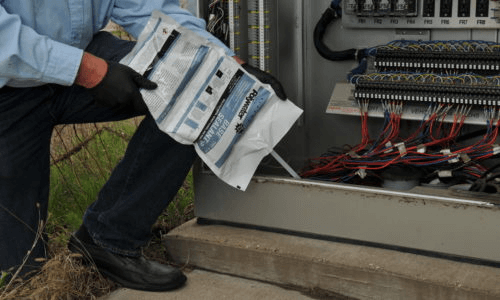
The site owner evaluated options to retroactively seal the boxes. The standard option, concrete, required that the entire solar site be powered down if poured by day, since the cement needed to be quickly deployed to multiple units before hardening. If concrete was poured at night, costs would rise to support the additional labor and overtime expenses required to manage deliveries and installation.
The EPC project manager discovered Polywater® InstaGrout™, a two-part self-leveling foam that creates a barrier to moisture and rodents. Unlike concrete, the foam is lightweight and re-enterable, allowing for fast and easy future service upgrades. It was selected over concrete for the remediation work because it could be installed gradually – one box at a time, did not require water or power sources on site, allowed for easy future upgrades, and permitted the array to maintain uninterrupted operation. It was deployed during the day, one inverter at a time, using standard work crews.
InstaGrout provided a robust pest barrier that was less expensive and labor intensive to implement than using concrete. Because only one inverter at a time could be powered down, sealing work could be done during normal working hours, thereby reducing overtime expense. InstaGrout was the best choice to harden the inverters against future rodent and pest intrusion to ensure uninterrupted power to consumers long into the future.
| Related Content: Taking the Bite Out of Rodent Damage |
Repairing Damaged Utility Poles with Expanding Foam Technology
A large oil & gas facility in Canada had over 60 Class 1 weathered utility poles with deep cracks that were being further damaged by woodpeckers. The site was remotely located and was surrounded by high security making commercial deliveries challenging. The logistics of delivering and installing new poles would have been cost prohibitive and required special access permits for outside vendors. The site needed a solution that could restore the poles’ integrity without requiring high cost, significant training, or outside labor.
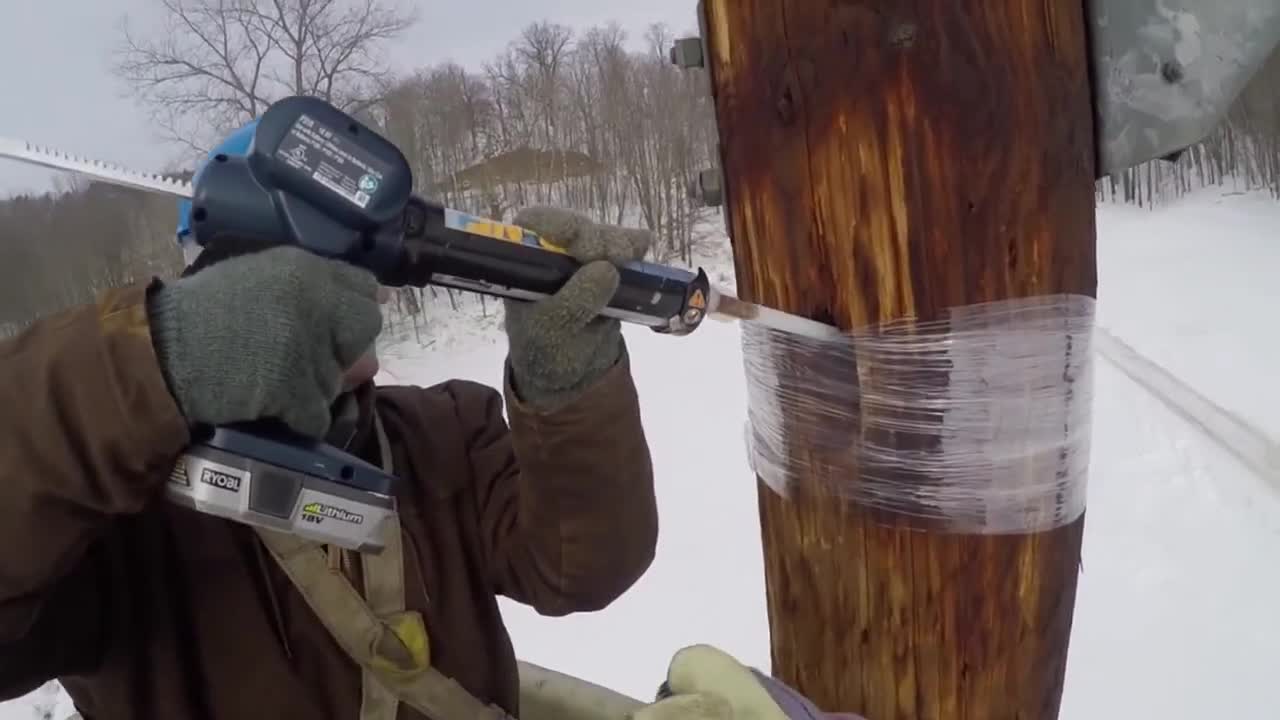
Repairing the poles seemed to be the only option. Various technologies exist in the market, but determining which was the best rested on an expanding foam technology that conforms to irregular shapes, adheres robustly, withstands environmental extremes, provides proper compressive strength, and yields enough exotherm to kill microbes responsible for rot.
Polywater® UPR™ was identified as the right solution. The heat generated during the curing phase is high enough to kill many of the microbes responsible for rot, thereby preventing further physical deterioration to the interior of the pole. The 2-part formulation ensures the repair matches the compressive strength of the wood poles and maintains integrity over time. The fact that no special training was required before the workers could deploy the solution independently was an added benefit to the customer.
Through a quick consultation with Polywater, the required UPR quantity was determined based on the number and dimensions of the voids. Just two weeks after product was ordered, it arrived on-site ready for use. The on-site crew finished the pole repairs within days instead of months using no special tools or specialized training. The cost/benefit assessment showed an approximate 10x savings by using UPR compared to replacing Class 1 poles.
| Related Content: UPR-NF Provides Performance at the Extreme |

Why Engineered Expanding Foams Solve Challenging Field Applications
While the examples reviewed here span a wide range of infrastructure assets and environments, they all need to prevent environmental intrusions that put a larger system at risk. Each use case involved preexisting infrastructure, complex shapes, remote or difficult worker access, short timelines, cost concerns, and may have deviated slightly from Polywater’s recommended application. However, through technical consultation and collaboration between Polywater and each site manager, new application methods were developed and tested, which allowed these engineered sealants to rise to the occasion and protect critical assets from imminent damage.
| Related Content: FAQ – Expanding Foam Duct and Conduit Sealing Applications |
Choosing the Right Expanding Foam for Infrastructure Protection
From flood-prone substations and remote pipeline facilities to solar farms and aging utility poles, each example demonstrates a common challenge: protecting existing infrastructure where conventional solutions were impractical, too costly, or unavailable. By partnering with Polywater to review and understand unique field conditions, customers tailored Polywater’s engineered expanding foam technologies to solve complex, niche problems—delivering practical, high-performance solutions that reduced costs, accelerated repairs, and extended the life of critical assets.
Operations & Maintenance professionals faced with environmental damage should investigate expanding foam products that are technically supported and have proven performance against the intrusions experienced by their infrastructure. A reliable sealant manufacturer, like Polywater, can work closely with you to evaluate the site and intended application, give application advice based on the product attributes, and test performance of the new application through hands-on and laboratory analysis. Unlike 1-part open-cell urethane foams, engineered expanding two-part foam technologies offer robust performance, ease of use, and reduced costs compared to traditional mechanical sealant systems or equipment replacement. When important infrastructure is compromised, and time & cost are of the essence, engineered expanding foam technologies can be delivered quickly, deployed easily, and protect the future of the network asset.
