Protecting Crews and Cables with the Right Sealant
Protect crews and cables from squirrels and insects. See how Polywater® AFT™ sealant improves safety, speeds installation, and prevents outages.
Background
Utility line workers face ongoing challenges from wildlife and insects that can damage equipment and create hazardous working conditions. Squirrels, in particular, are a leading cause of outages, often chewing through wiring or triggering short circuits on transformers. In addition, wasp infestations—especially from aggressive species like bald-faced hornets—pose serious safety risks when servicing pole-top infrastructure.
To address these issues, utilities rely on a mix of preventive and direct mitigation strategies designed to protect both equipment and personnel.
For squirrel-related damage, common solutions include:
- Pole Guards/Wraps: Non-conductive, slick plastic barriers installed on poles to prevent animals from climbing and reaching critical equipment.
- Line Guards/Spinners: Rotating devices mounted on overhead lines that spin when touched, preventing animals from maintaining balance and crossing.
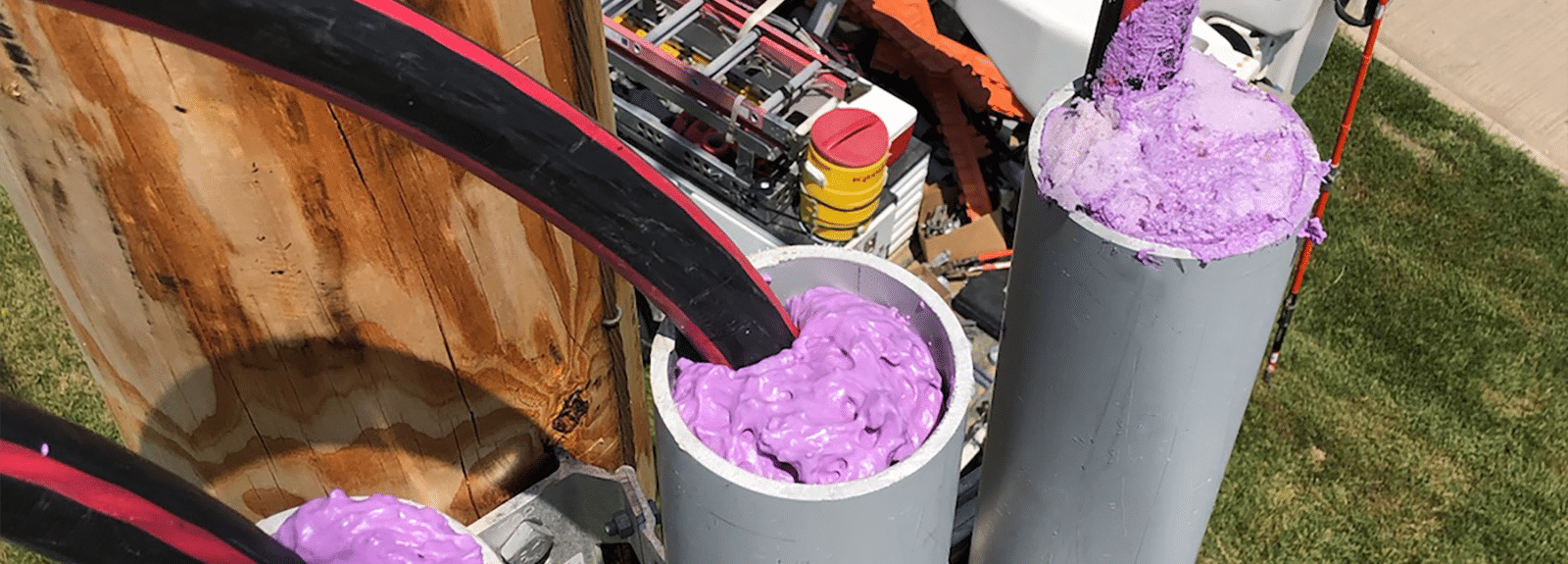
- Chemical Sealants: Foam-based sealants used to close off entry points in U-guards and conduits stopping rodents from nesting or tunneling into riser poles.
To manage wasp-related risks, linemen implement:
- Preventive Sealing: Closing gaps in equipment enclosures and conduits to discourage nesting and reduce exposure to stinging insects.
Together, these measures improve grid reliability while reducing safety risks for field crews.
| Related Content: Keeping Rodents Out of Critical Infrastructure |
Challenge
A utility in the southern United States experienced persistent outages caused by squirrels damaging cables. The contractor needed a sealing solution that could:
- Effectively block access for animals and insects
- Be quick and easy to install
- Provide a durable, long-lasting seal
- Withstand harsh weather and UV exposure
- Eliminate the need for complex tools or long cure times.
Additionally, minimizing the time linemen spent working from aerial buckets—especially in high winds—was a critical safety priority.

Evaluating a Solution
The utility had previously specified Polywater® FST™ for sealing vault openings. This two-part urethane system provided a reliable barrier against water ingress, particularly during storms when groundwater levels rose.
However, for sealing U-guards on utility poles, crews needed a faster and simpler alternative. While effective, Polywater FST required more time and handling than desired for elevated work.
To address this gap, the utility chose to trial Polywater® AFT™ Spray Foam Sealant, a faster-curing sealant designed for easier field application.
| Related Content: Sealing Conduits for Resilient Electrical and Telecommunication Systems |
Implementation and Results
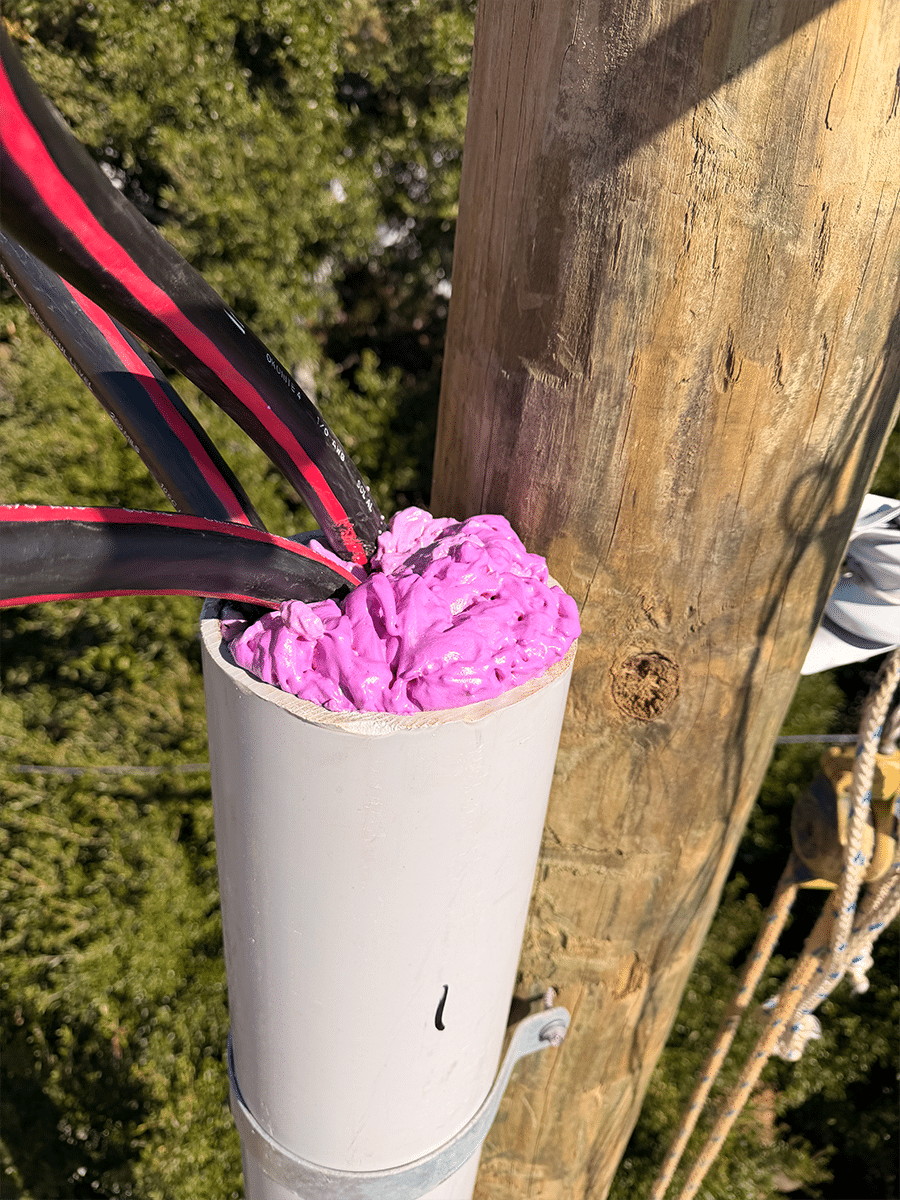 Field crews reported overwhelmingly positive feedback following the trial. Polywater AFT proved easy to apply and reached a functional cure within minutes, significantly reducing installation time.
Key outcomes included:
-
- Faster application with no specialized tools required
- Reduced time spent working at height in bucket trucks
- Immediate, reliable sealing performance.
Based on these results, the utility officially specified Polywater AFT for sealing risers on utility poles.
Conclusion
Preventing wildlife-related damage is essential for maintaining reliable power delivery. Polywater AFT provided an effective solution for sealing utility pole risers, blocking both rodent and insect intrusion.
Its fast cure time and ease of use improved crew efficiency and safety by reducing time spent in elevated work conditions. By protecting critical cable infrastructure, Polywater AFT helps minimize outages, enhance system reliability, and support a safer working environment for utility personnel.