Improving on a Proven Formula: The Evolution from Type FD to Type RP
Learn why Polywater is replacing Type FD with Type RP. Discover the safety, dielectric performance, IEEE 1493 testing, and field benefits behind the transition.
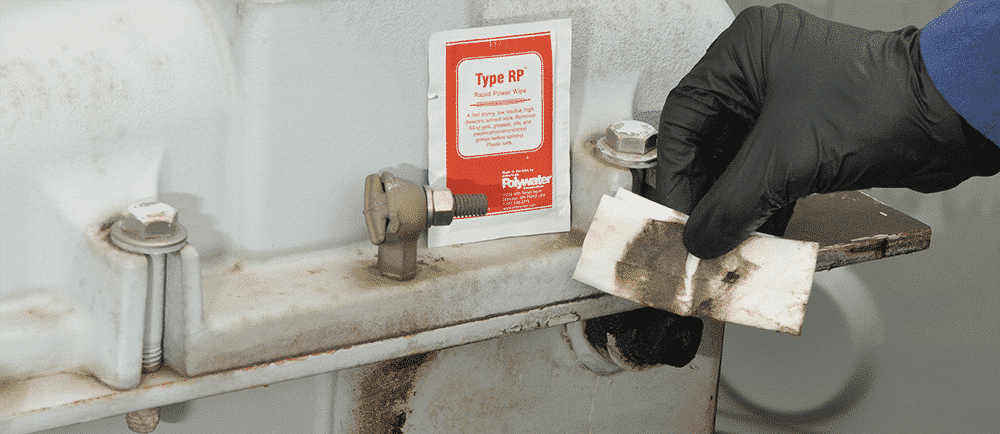
For decades, Polywater® has manufactured chemical solutions for electrical and telecom splices and connections to ensure the dielectric and physical integrity of cable and fiber infrastructure. While Type FD has served as an effective cleaner and degreaser, it will be discontinued effective August 1, 2026, and replaced by Type RP.
Given that Type FD met customer performance expectations, this review details the technical and regulatory drivers behind the transition, featuring insights from Max Segar, Senior R&D Chemist at Polywater.

What customer feedback influenced the decision to redesign or replace the product?
Max: Polywater did not receive negative customer feedback regarding the cleaning efficacy of Type FD; it has been a reliable cable cleaner for decades. However, our R&D team continuously evaluates products against evolving safety regulations and technical performance benchmarks. The decision to transition was proactive rather than reactive.
Why did Polywater choose to retire the legacy version rather than maintain dual inventory?
Max: Polywater aims to optimize product safety profiles and environmental alignment without compromising functional performance. Type RP matches the degreasing performance of Type FD but eliminates a GHS health hazard classification and introduces versatile packaging. Maintaining dual production lines for an inferior safety profile is inefficient when a technically superior alternative exists.
| Related Content: Cleaning Rubber Goods for Safety |
What was the primary challenge in developing the new formulation?
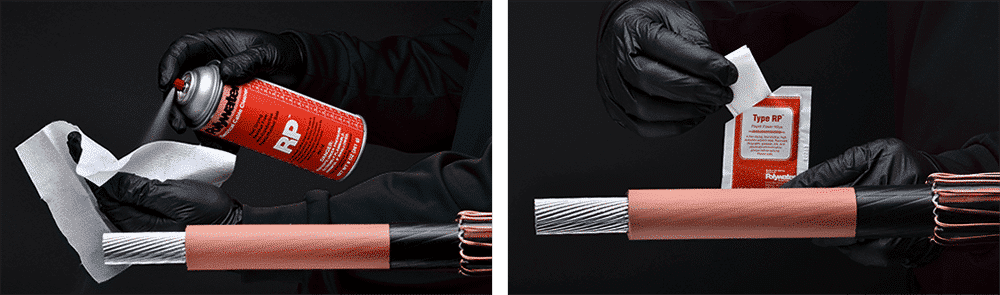
Max: The primary challenge for the R&D team was completing the full IEEE 1493 standard guide for testing cable cleaning solvents. This standard involves a multi-phase evaluation protocol. In medium and high-voltage applications, using an incompatible cleaner can cause insulation degradation and subsequent failure. Type RP passed all criteria of IEEE 1493, verifying that it is chemically compatible with cable insulation materials and safe for technician use while remaining fast evaporating.
What was the duration of the development and testing cycle?
Max: The full process from initial formulation to final product launch required approximately 9 months. This timeline included reformulating the compound, conducting extensive bench testing to optimize dielectric performance, preparing the specific material substrates required for IEEE 1493 qualification, and final validation.
Can you share data or test results demonstrating the baseline differences, including IEEE 1493 testing?
Max: While specific chemical formulations remain proprietary, the comparative safety data sheet (SDS) metrics and physical properties demonstrate quantifiable changes. Notably, hazard statements have been reduced. Furthermore, the chemical modification allows Type RP to be compatible with flexible pouch packaging, addressing a consistent market requirement.
| Related Content: The Role of Specialty Cleaners in PPE Safety: Q&A with Randy Barnett, NFPA Certified Electrical Safety Professional (CESCP) |
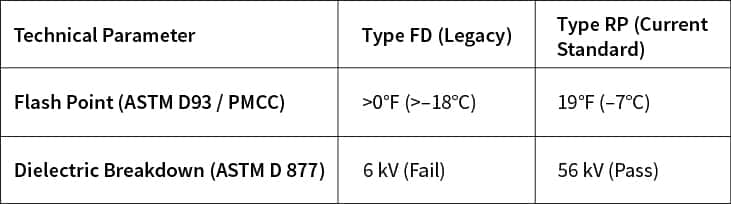
Type FD vs. Type RP: Technical Comparison
How does the performance profile of the new product differ from its predecessor?
Max: Type RP exhibits higher dielectric strength than Type FD. A cable cleaner’s dielectric strength measures its capacity to act as an insulator and prevent electrical arcing under high-voltage stress. This is a critical safety metric when technicians work on or near de-energized electrical infrastructure that may be subject to accidental re-energization.
What practical field benefits will users observe with Type RP?
Max: Type RP is a versatile fast evaporating cleaner. It is fully approved to meet IEEE 1493 performance parameters for cable. It is compatible with electrical components and has good electrical properties for these specialty applications. It is also available in pre-saturated wipes and flexible pouch options for additional convenience and safety. For aerosol users, the RP-16 aerosol has drop-in performance compared to the FD-9. These users will have the added benefit of a larger variety of package options for different projects.
| Related Content: The Compelling Logic of Presaturated Cleaning Wipes |
What data would you present to users hesitant to change from the legacy version?
Max: Field crews will be handling a solvent with fewer health hazards and reduced regulatory warnings. From a risk-management perspective, this lowers chemical exposure variables for both the utility company and the technicians. Additionally, Type RP has a 10-year field history with documented adoption and stable performance data. Polywater has verified both laboratory and field efficacy, supporting a 100% transition to Type RP.
A Confident Transition to Type RP
While Type FD provided acceptable degreasing capabilities, modern industrial hygiene standards and technical packaging constraints required a formulation update. The data indicates that Type RP maintains equivalent cleaning efficiency while offering superior dielectric breakdown strength and a reduced chemical hazard profile, allowing engineering and safety teams to approve the transition with confidence.