How Vertical Bends Affect Cable Pulling
Learn how vertical bends affect cable pulling tension and why accurate bend calculations are essential for safer, more predictable cable installations.
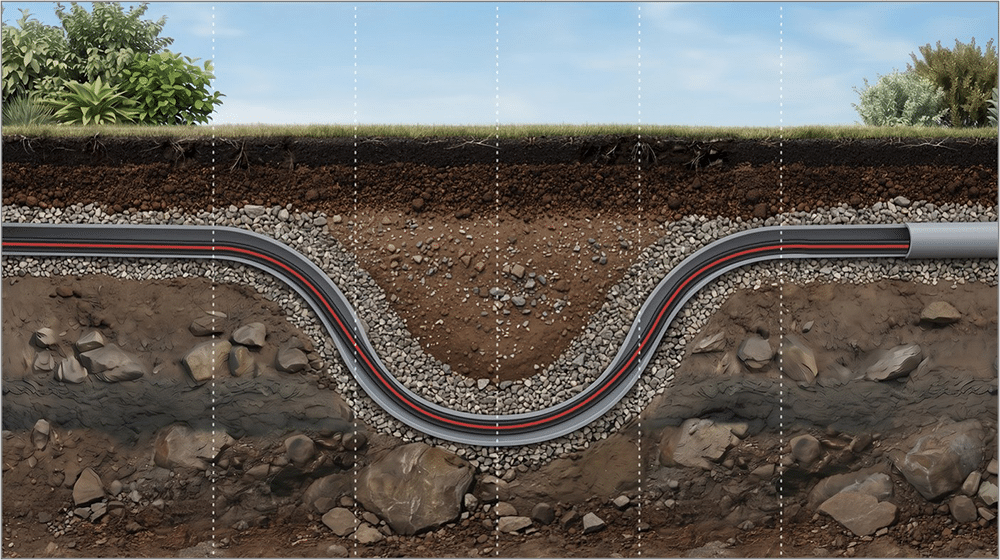
When planning an underground cable pull, the key factors include route length, conduit size, cable weight, and the number of bends. Cable tension increases in varied ways as it is pulled into a conduit bend, and this can have a surprising impact on installation success.
Both horizontal and vertical bends can quickly add tension to the pull. For horizontal bends, the orientation of the bend and direction of the pull do not matter. In vertical bends, these details impact the tension calculation. Unfortunately, the type of vertical bend is not always clear.
| Related Content: Coefficient of Friction in Cable Pulling Tension from Conduit Bends |
Vertical Bends: Which Way Is Up?
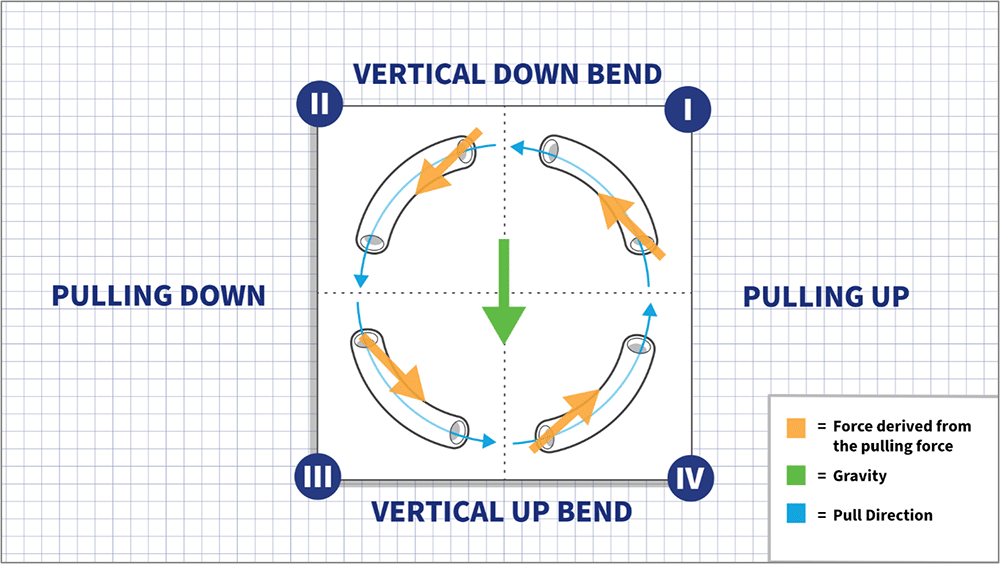
Imagine a round bowl filled with water. The outside of the bowl represents a vertical concave up bend. It holds the water because the curved surface is oriented upwards. Now imagine tipping the bowl upside down. All the water spills out, and you have a vertical concave down bend. This is gravity in action. There are similar forces acting on cable as it is pulled up and down through these various bends. Depending on orientation, gravity pushes the cable into the bend and sometimes it pulls it away.
Depending on whether the cable is pulled up or down within the type of bend requires entirely different pulling equations to account for the forces on the cable. That’s why experienced planners treat each bend independently to get the most accurate pull tension calculation.
Why Vertical Bends Matter in Cable Pull Planning
Every cable installation has recommended limits for pulling tension and sidewall bearing pressure. Exceeding those limits can increase the risk of jacket damage, insulation damage, conductor deformation, or long-term reliability issues.
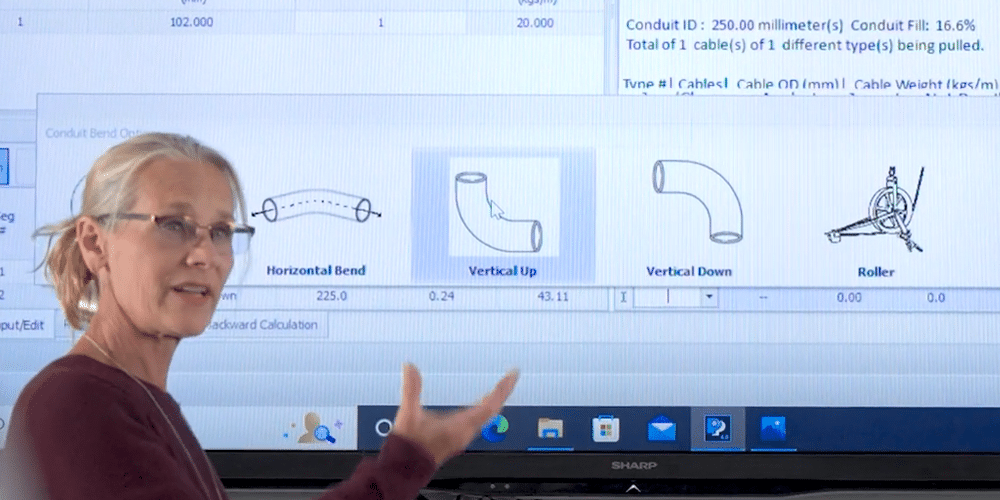
Today’s cable pull planning software makes this process much easier by modeling the entire cable route, including vertical bend types, bend radii and angles, length, and pull direction. This provides a more complete picture of how forces change throughout the installation.
Better Planning Leads to Better Installations
Accounting for vertical bends doesn’t necessarily make a project more complicated, it makes the installation more predictable.
By understanding how vertical bend types affect ending tension, engineers can reduce installation risk, stay within cable manufacturer limits, and improve the likelihood of a successful pull on the first attempt.
If you’d like to see this concept in action, watch the video below, which illustrates how vertical bends influence cable pulling forces and explains why they’re an important part of underground cable installation planning.
