Weathering Ice Storms: Evaluating Overhead vs. Underground Power for Mission-Critical Facilities
Learn how ice storms impact power reliability and compare overhead vs. underground systems to improve resilience for mission-critical facilities.
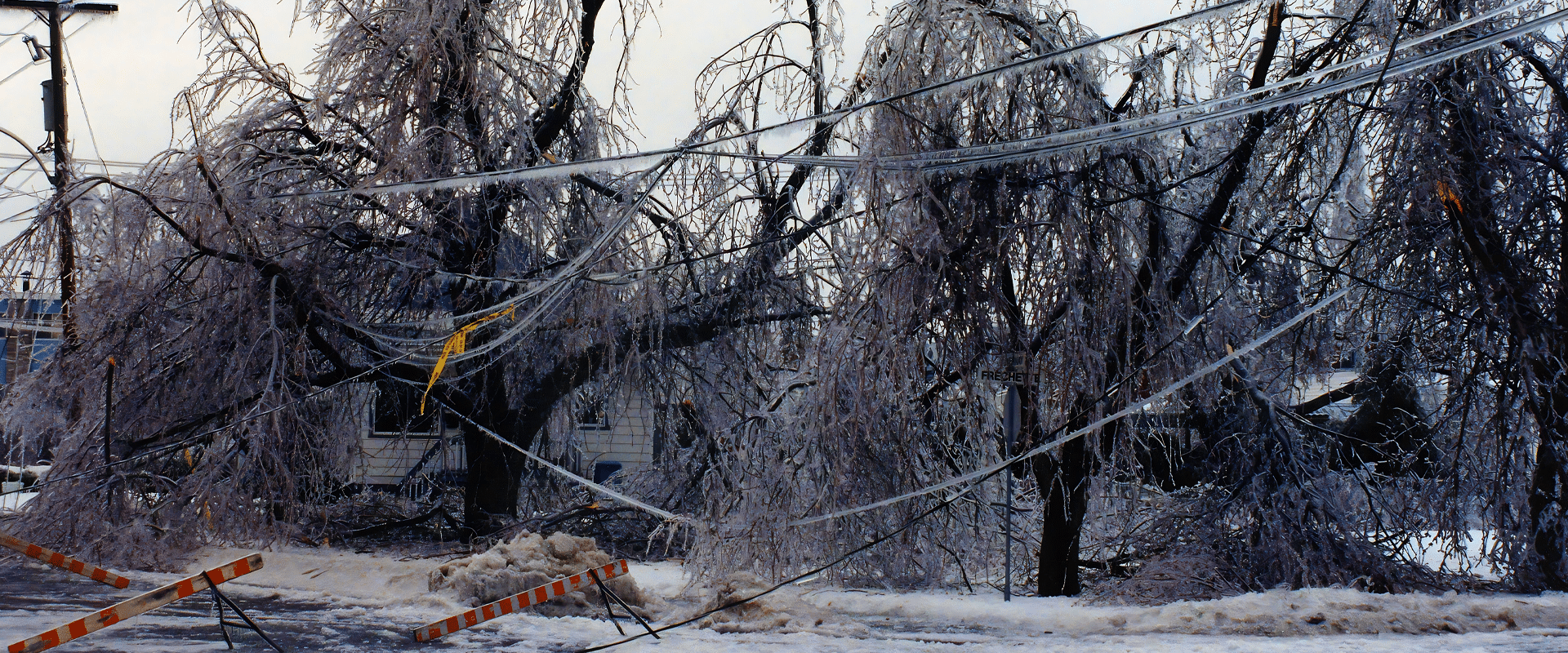
Extreme winter weather, from ice storms to blizzards, can result in power interruptions and instability, especially when it comes to mission-critical facilities. For example, in 2020, a severe ice storm inflicted widespread outages and grid failures in Texas, and more recently in early 2026, Winter Storm Fern left more than a million Americans in the dark.
While it takes time to restore power and rebuild infrastructure following any severe weather event, ice storms can be particularly time-consuming for field crews. For example, the weight of ice on tree limbs can cause vegetation to crash onto power lines, leading to outages. As the trees continue to fall, line workers may need to repair or replace power lines more than once, extending the restoration time.
When wind blows over the ice-coated power lines, it can create an effect called galloping, which can strain conductors to their breaking point. In the wake of a winter storm, ice can form a wing-like shape on one side of the conductor. Combining the asymmetrical ice accumulation with perpendicular strong winds can create a low-frequency, high-amplitude oscillation of the power line, resulting in power outages and infrastructure damage.
Impact of Outages
When ice storms freeze over a utility’s service territory, power to customers is typically disrupted. For data centers, even short disturbances can trigger major operational impacts, said Joe Murphy, director of business development for W. Bradley, LLC., a Novato, Calif.-based contractor specializing in data centers.
“These impacts can include transfers to backup systems, stress on UPS (uninterrupted power supplies) and batteries, and increased risk if outages are prolonged,” he said. “When restoration timelines extend, it becomes a fuel, maintenance, and continuity challenge. That directly affects uptime, service level agreements, and customer confidence.”
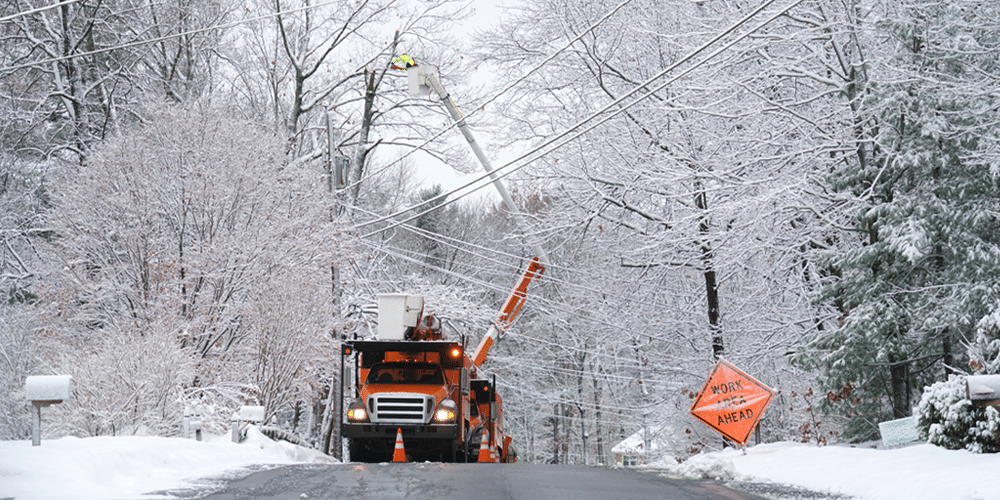
Going Underground
To keep the power flowing for their mission-critical operations, some data centers are opting to bury their power infrastructure underground, which offers several key benefits, Murphy said.
“Undergrounding reduces exposure to common overhead risks like wind, ice, and debris,” he said. “For mission-critical facilities, it can provide a more protected and stable service entrance, particularly in high-risk weather regions. In many cases, a hybrid approach of strategically undergrounding key segments delivers the best balance of resilience and cost.”
| Related Content: Five Most Cited Advantages of Duct Installed Power Cable |
Like anything related to construction, however, undergrounding distribution power lines is not without its downside. Murphy said undergrounding can shift the risk profile.
“They can be vulnerable to flooding, harder to access, and more complex to repair,” he said. “There are also thermal and capacity considerations. Successful underground design requires coordination across civil, electrical, and drainage systems to ensure long-term reliability.”
Preventing Outages in Winter Weather
The ability to prevent outages begins at the planning and design stages. Any opportunity to minimize or eliminate splices and underground structures in system design can limit potential vulnerabilities.
| Related Content: Planning Underground Cable in Conduit Pull Defining a Safety Factor to Maximize Cable Lifespan |
Engineers and planners can safeguard facilities and equipment by designing underground systems that maximize the ability to install longer lengths of cable. Planning teams can leverage the Polywater® Pull-Planner® software to model cable runs that safely accommodate longer cable lengths and eliminate the need for splices or underground structures.

Beyond undergrounding, mission-critical facilities can leverage other best practices to quickly and easily boost the resiliency of their electrical system. To shield electrical equipment from moisture and extreme temperatures, they can apply sealants designed to create air-, gas-, and water-tight seals.
Murphy said his electrical team focuses on winterizing critical equipment and protecting generators, batteries, and exposed systems from temperature and moisture. Beyond that, increased monitoring is key.
“Sensors for temperature, moisture, and system performance allow operators to identify issues early and respond before they escalate into outages,” he said.
Utilities are also taking a portfolio approach combining system hardening, improved materials, better sealing and splicing, redundancy, and predictive maintenance. One of the most important factors, however, is coordination.
“When utilities, engineers, and contractors align early, you build resilience into the system, not just the components,” he said.
| Related Content: Engineers Identify Collaboration as the Key to Successful Cable Installation |
By undergrounding critical sections of the power distribution system, leveraging planning software, and applying sealants, contractors and engineers can keep the power flowing to maximize uptime and reliability for mission-critical facilities.